
If you’ve ever seen 124.6.128.20 in your website traffic logs or server access logs, you might wonder what it really means. This IPv4 address acts as a network device identifier, helping systems communicate efficiently and ensuring smooth data transmission across the internet. Understanding how it works can improve your network monitoring and digital security, while giving you insights into user behavior and online activity.
For a deeper look at similar addresses, check out our guide on 183.63.127.22 Explained: A Powerful Guide to This Public IPv4 Address, which breaks down another public IPv4 address and its role in network routing.
What is 124.6.128.20?
124.6.128.20 is an IPv4 address, a standard format for identifying devices on the Internet. It serves as a network device identifier, allowing systems to know where data should go. Every time you visit a website or send information online, your IP address ensures accurate delivery.
This number is part of a bigger system called Internet Protocol (IP). It acts like a digital home address, helping devices communicate and confirming that data reaches the right location. Understanding this is important if you want to monitor website analytics or track unusual activity on your network.
How 124.6.128.20 Works
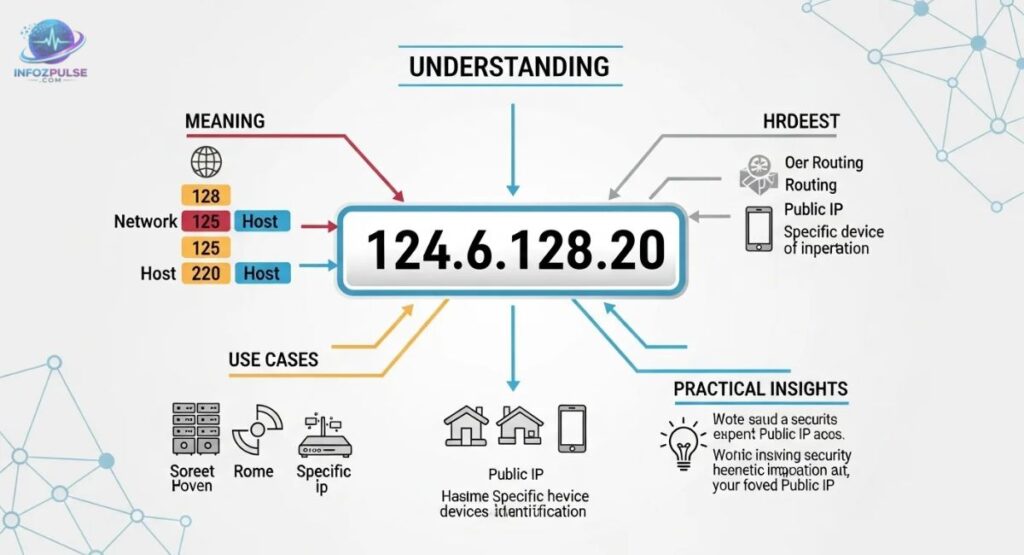
When data travels online, routers use network routing to send information to the correct IP address. 124.6.128.20 tells servers which device requested content, making communication seamless. Without it, data transmission would be chaotic, and websites couldn’t know who was accessing them.
The address appears in server access logs, which track every connection to your system. These logs are useful for security monitoring for IPs, performance analysis, and understanding your traffic patterns. By studying them, you can distinguish real users from bots and optimize overall network behavior.
Structure of 124.6.128.20
This address has four segments separated by dots. Each segment ranges from 0 to 255, defining the network and device identification. The IPv4 structure is simple yet effective, still widely used despite newer protocols.
By looking at this structure, administrators can tell whether the IP is static or dynamic. Static IPs remain constant, while dynamic IPs change over time. This distinction helps in tracking visitor behavior and planning network resources effectively.
Common Use Cases
Website owners often notice addresses like 124.6.128.20 in website traffic logs. It shows who visits, when, and from where. This information is essential for marketing analysis and resource planning.
Network admins use it in network monitoring to detect anomalies or repeated requests. Security teams also reference it when investigating potential threats or unusual access patterns. The context determines whether the IP is harmless or needs attention.
Monitoring and Security
Knowing the IP helps maintain digital security. Repeated requests or failed logins from 124.6.128.20 can indicate automated activity or attempted breaches. Monitoring such events allows you to decide whether to block or allow access.
It’s crucial not to assume every appearance is a threat. Professional monitoring focuses on analyzing IP data over time. This prevents unnecessary restrictions while keeping networks safe and performance optimized.
Identifying Devices Online
Addresses like 124.6.128.20 help in identifying devices online. They are used to understand connections between systems and map traffic flows. This insight helps diagnose problems and improve network performance.
Device identification also helps you distinguish between human users and automated scripts. This improves website analytics accuracy and ensures that reports reflect real engagement rather than bot activity.
Understanding Logs and Access Patterns
Every time a device interacts with a network, the IP address is logged. Logs and access patterns show frequency, origin, and type of request. Observing these helps predict potential issues before they affect performance.
Administrators use this data for security monitoring for IPs and performance tuning. It ensures smooth online connectivity, reduces latency, and improves the user experience across servers and websites.
Practical Value for Website Owners
For website owners, recognizing 124.6.128.20 can improve website traffic sources analysis. It helps in understanding visitor behavior and separating genuine users from bots.
By tracking network behavior, you can respond quickly to unusual activity without disrupting legitimate traffic. This protects resources and ensures your website stays reliable and secure.
Optimizing Network Performance
Analyzing IP addresses like 124.6.128.20 supports optimizing network performance. Knowing where requests originate allows better load balancing and system tuning.
Network admins can identify bottlenecks and enhance data transmission efficiency. This ensures faster page loads, better server response, and an overall improved experience for all users.
Conclusion
124.6.128.20 is more than just a string of numbers. As an IPv4 address, it plays a crucial role in routing data on the internet, monitoring traffic, and maintaining digital security. By understanding its structure, behavior, and use cases, you can make informed decisions about network performance and website analytics. Whether you’re an IT professional, website owner, or tech enthusiast, recognizing how 124.6.128.20 fits into the digital ecosystem ensures better control, smarter decisions, and safer online operations.
Meta Description
Discover 124.6.128.20: Learn how this IPv4 address works, its role in network routing, digital security, and website traffic tracking.

Welcome to Infoz Pulse! I am dedicated to helping businesses improve their online presence and achieve growth through effective SEO strategies.